Paul Fjelrad · Nov 6, 2025 · 6 min read
Letting It Evolve: The Benefits of an Emergent Architecture Approach
Let's talk about architecture. Not the kind with bricks and mortar, but the kind that lives inside your phone, your laptop, and pretty much everything you use and interact with these days. I'm talking about digital architecture.
Now, before your eyes glaze over and you start thinking this is going to be full of tech jargon and diagrams that look like spaghetti, don't worry. This isn't that kind of article. This is about a simple idea: we don't have to get everything right the first time.
The Myth of the Perfect Plan
For a long time, people thought that building a digital system was like building a house. You draw up the plans, you get them approved, and then you build exactly what's on the blueprint. No changes. No surprises. But here's the thing: a structure in the digital world isn't a house. It's more like a garden.
You don't plant a garden by drawing a perfect map of where every flower will go for the next ten years. You plant what makes sense now, see how it grows, and adjust as you go. Maybe the tomatoes need more sun. Maybe the lavender takes over. You learn, you adapt. That's what emergent architecture is all about.
What Is Emergent Architecture?
Emergent architecture is the idea that your system's structure — the way it's built and how all the parts fit together — doesn't have to be perfect from day one. In fact, it probably shouldn't be.
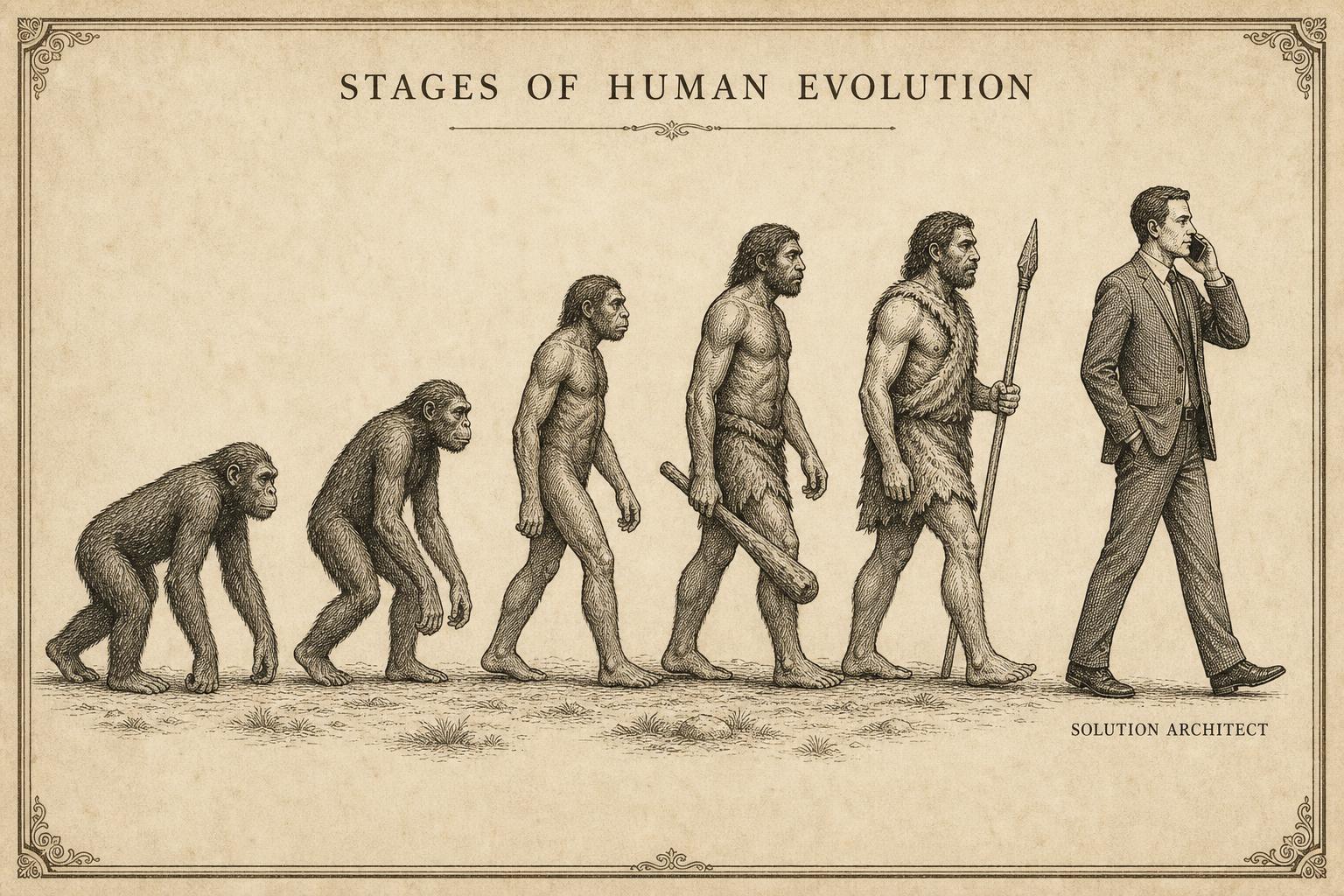
I know it makes some architects, and probably some clients, a little uncomfortable when I say this, but your first design is going to be wrong. And that's ok. What we do now is so much more complex than when I started in this game. Embrace this reality and use it to your advantage. Avoid big design up front and evolve your architecture.
Start with the simplest thing that works based on what you know right now. Then, as your needs grow and your understanding deepens, you evolve the architecture to match.
Why This Matters
Let's say you're building an app. Maybe it's for booking dog walkers. You don't need to design a system that can handle a million users on day one. You just need something that works for your neighbourhood.
If you try to build the “perfect” system from the start, you'll spend months (or years!) planning for problems you don't even have yet. And by the time you launch, the world might have changed. In fact, perhaps the only thing that is certain is that it absolutely will have changed, and usually in entirely unexpected ways. Your users might want something different, technology will have moved on, perhaps the laws and regulations have shifted.
Emergent architecture says: build what you need now, but don't box yourself in. Your vision state is still out there, and it needs to be continuously updated too — but you're not there yet.
But Isn't That Risky?
Some people worry that if you don't plan everything upfront, you'll end up with a mess. And yes, if you never think ahead, you might. But emergent architecture isn't about winging it. It's about intentional flexibility.
You still have a vision — a sense of where you're going. But you're open to changing course if you discover a better path. You're not locking yourself into decisions that are hard to undo.
Think of it like hiking. You have a destination in mind, but you're willing to take a different trail if the one you're on gets muddy or blocked. You're not blindly following the map — you're responding to the terrain.
Feedback Is Your Friend
Any good UI/UX person will tell you that one of the best things about building anything visual in small steps is that you get feedback early. You can see what works and what doesn't. It's the same for any system. Continuous feedback and iterative delivery mean you can spot problems before they escalate and become disasters.
Emergent architecture thrives on this feedback. It lets you make better decisions because you're not guessing — you're learning. Test, learn, adjust, improve.
Trusting the Team
Another big part of this approach is trust. In the old days, architects would hand down designs from on high, like commandments, and the engineering team were expected to follow them to the letter.
But in an emergent world, architects and engineers work together, along with users, infrastructure teams, security, and just about anyone who has a stake in this. Collaboration is key. Architects provide guidance, but they also listen, always making sure consensus is happening around a shared evolving vision, distilling and communicating as they go, reducing uncertainties and mitigating risk. They support and enable the team, sorting out the challenges before they hit.
I like to think of it as ploughing the road so the team can pick up pace and deliver.
Architecture As A Living Thing
At the end of the day, architecture isn't a one-time event. It's a living, breathing part of your systems and your enterprise. It grows with you. It changes as your needs change. And that's a good thing.
Because the world doesn't stand still. Your users won't. Your business won't. So why should your architecture?
Final Thought
So here's the takeaway: don't aim for perfect — aim for adaptable. Start small. Learn fast. Build what you need today, and leave space for what you'll need tomorrow.